
Traditions
Alevism: The Sacred Tradition of Ali and the Ancient Cult of Angels
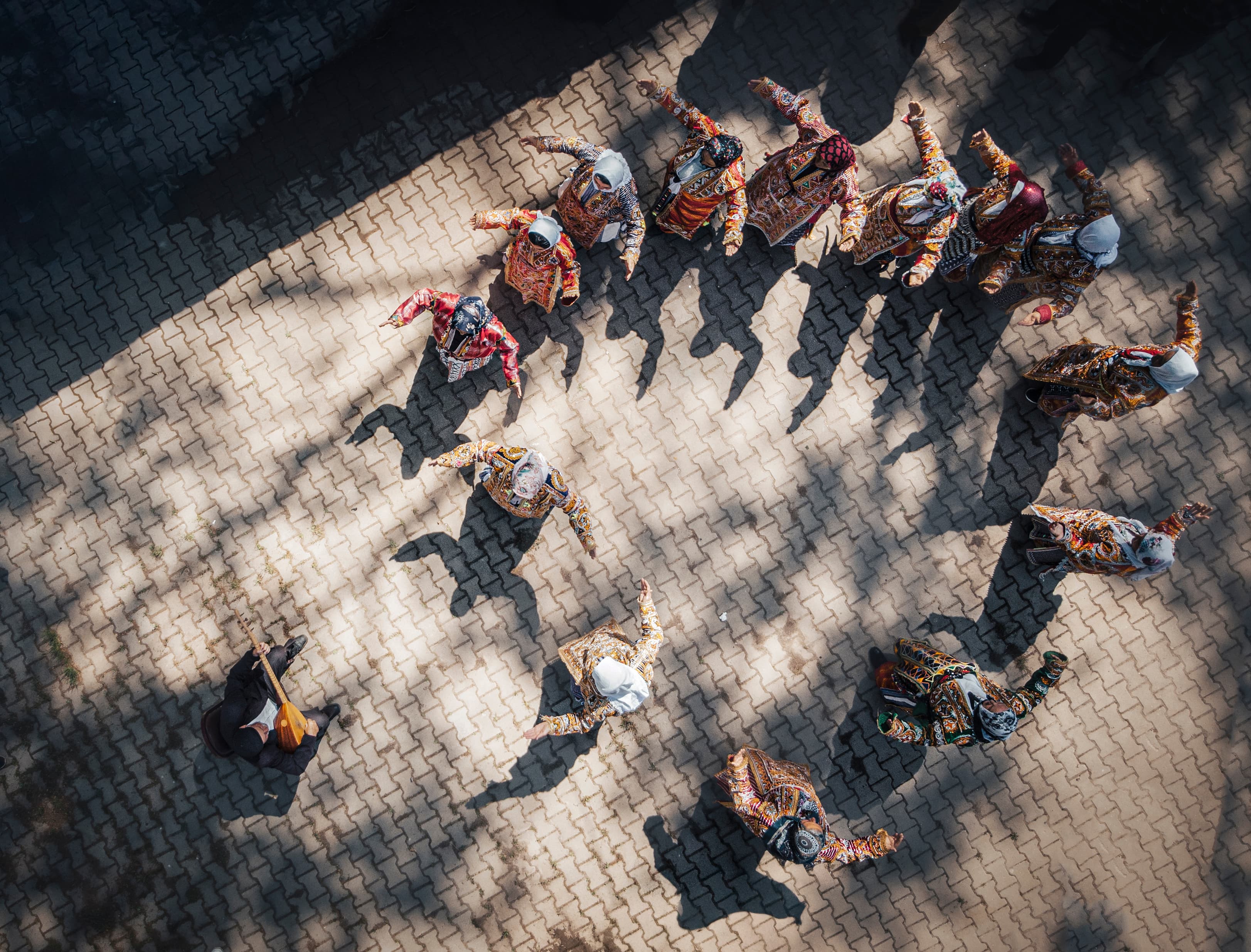
Across eastern Anatolia and Kurdistan, Alevism has preserved a distinctive religious tradition centered on sacred manifestations, communal ritual, and reverence for Ali. Associated particularly with the Dimila Kurds and some Kurmanji-speaking communities, it is known by names including Alevi, Alawi, and Qizilbash. Alevism belongs to the ancient Cult of Angels, with Ali regarded as a primary avatar of the Universal Spirit. In Alevi tradition, Ali and the Prophet Muhammad are joined as Alimuhammad. Its religious life includes communal ceremonies, hymns, and reverence for the sun and moon.
Vision Operations Cultural Desk
Kurdistan, Erbil
CONTEXT
Why Alevism Matters
Alevism occupies a distinctive place among the religious traditions of the Kurdish world.
It is associated particularly with the Dimila Kurds of Anatolia, but the wider Alevi tradition also includes Kurmanji-speaking Kurds, Turkmen communities of Anatolia, and related communities in Syria and central Kurdistan.
Its place within the Cult of Angels is central to understanding the tradition.
Alevis recognize Ali as the most important primary avatar of the Universal Spirit in the Second Epoch of universal life. This gives Ali a position far beyond that of a historical religious figure and places him at the center of Alevi spiritual understanding.
At the same time, Alevism developed within a world increasingly shaped by Islam. Its terminology, historical relationships, and political associations became closely connected with Shi'ism, particularly during the rise of the Safavids.
What you will learn
- 01The place of Alevism within the Cult of Angels.
- 02Ali, Alimuhammad, and the Universal Spirit.
- 03The religious traditions of Dimila Alevism.
- 04Jamkhana, Ayini Jam, and communal ritual.
- 05The connection between Alevism and the rise of the Safavids.
- 06The Alevi communities of Kurdistan, Anatolia, and Syria.
Key takeaways
- 01Alevism is presented as another denomination of the Cult of Angels.
- 02Ali occupies a central position as a primary avatar of the Universal Spirit.
- 03Alevi tradition joins Ali and Muhammad as Alimuhammad, a single avatar with double manifestations.
- 04Dimila Alevism preserves rites connected with the rising sun and moon.
- 05The communal gathering known as Jamkhana is observed as the Ayini Jam.
- 06Women participate fully in Alevi religious gatherings, including the major Ayini Jam.
ORIGINS
Understanding Alevism
The Cult of Angels
Alevism belongs to the wider religious tradition known as the Cult of Angels.
The majority of the Dimila Kurds of Anatolia, together with some of their Kurmanji-speaking neighbors, are identified with this branch of the tradition.
Different names have been used for its followers. Alawis refers to the Followers of Ali. Alevis is associated with the People of Fire. Qizilbash, meaning “red heads,” refers to the distinctive red headgear historically associated with them.
The name Nusayri is also used in connection with another branch of the tradition, particularly among the Alevi communities of coastal Syria.
These different names reflect the complex history through which the religion developed across Kurdish, Anatolian, and Syrian communities.
Ali and the Universal Spirit
At the center of Alevi belief stands Ali.
Alevis recognize Ali as the most important primary avatar of the Universal Spirit in the Second Epoch of universal life.
This understanding gives Ali an extraordinary position within the religion.
Unlike Yarsanism, however, where Ali appears as a distinct avatar, Alevis join Imam Ali and the Prophet Muhammad together as Alimuhammad.
Alimuhammad is regarded as a single avatar with two manifestations.
The name became especially significant during the rise of the Safavids. Shah Isma'il I, founder of the Safavid dynasty, used the formula “Alimuhammad” in his writings and at other times referred to himself as Haq, the Spirit.
The reverence for Ali therefore became more than a religious devotion. It became one of the most visible signs of the Alevi religious world and eventually played an important role in the political and religious movements of Anatolia and Persia.
THEOLOGY
Core Beliefs of Alevism
Ali as Divine Manifestation
Alevism places Ali at the center of its understanding of divine manifestation.
Ali is not regarded simply as the first Shi'ite imam or as an important historical figure. He is understood as the primary avatar of the Universal Spirit in the Second Epoch.
This belief connects Alevism to the wider cosmology of the Cult of Angels, in which the Universal Spirit manifests itself through successive sacred figures.
The Alevi understanding of Ali therefore gives the religion its distinctive spiritual character.
The devotion to Ali became so prominent that the religious community itself became identified with his name.
Jamkhana and Ayini Jam
One of the most important expressions of Alevi religious life is the communal gathering known as Jamkhana.
Among Dimila Alevis, this gathering is observed as the Ayini Jam, or “Tradition of Jam.”
The major Jam is the great annual communal gathering.
It coincides with the great Muslim Feast of Abraham that concludes the Hajj pilgrimage to Mecca and includes the sacrifice of a lamb.
The name Jam itself carries an older religious history. It is connected with Jamshid in Zoroastrian tradition and Yam in the Veda, the great Aryan hero associated with the creation of the New Ruz tradition.
Within the Alevi tradition, the Jam therefore carries both communal and religious significance.
The gathering brings the community together in a ceremony that preserves the distinctive character of Alevi religious practice.
The Sun, Moon and Sacred Rites
Dimila Alevism preserves religious rites connected with the sun and moon.
Its practices include daily bowing toward the rising sun and moon and the recitation of hymns for the occasion.
These practices are presented as part of the older religious character of Dimila Alevism and connect its ceremonies with ancient Aryan religious traditions.
Another practice survives among some Dimila tribes: the worship of a deity represented by a sword or dagger stuck into the ground.
The practice is associated with several Dimila tribal communities and is presented as an ancient Iranian religious rite.
These traditions give Alevi religious practice a distinctive character in which sacred symbols, celestial bodies, communal ceremonies, and inherited ritual remain closely connected.
TRANSMISSION
Communal Tradition and Religious Gathering
Alevi religious life is expressed strongly through communal gathering.
The Jamkhana and the Ayini Jam provide a setting in which religious tradition is performed collectively rather than experienced only as individual belief.
The major annual Jam brings the community together around ritual, sacrifice, and religious observance.
The continued presence of these communal practices gives Alevism a social structure in which religious identity is reinforced through participation.
Women also have a significant place within these gatherings.
Alevi communities allow full participation of women in religious rituals and gatherings, particularly during the major Ayini Jam.
This position distinguishes the Alevi tradition from the social and religious systems of many surrounding communities.
SACRED PRACTICE
Women, Ritual and Community
The participation of women is one of the notable characteristics of Alevi religious practice.
Women participate fully in Alevi rituals and communal religious gatherings, including the major Ayini Jam.
This became particularly important because outsiders accused the Alevis of practicing a communal sexual ritual associated with the “candle blown out” tradition.
The religious gathering itself, however, is described as a central communal ceremony in which women and men participate.
The status of women therefore forms an important part of the social character of Alevi religious life.
HISTORY
Alevism and the Safavids
Alevism played an important role in the religious and political movements of the fifteenth and sixteenth centuries.
The reverence for Ali became one of the most visible religious signs of the Qara Qoyunlu and early Safavid dynasties.
The rise of the Alevis was supported by the participation of Kurdish and Turkmen communities.
Among the Kurdish tribes involved in the Safavid Alevi revolution were the Shamlu, Shaykhawand, Shadlu, Khajawand, Zafranlu, Stajlu, and Quvanlu.
These movements helped carry Alevi religious ideas beyond individual communities and into the political struggles of the period.
The red headgear worn by the Qizilbash became the visible symbol from which the name “red heads” was derived.
The same red headgear continued among Alevi Dimila Kurds of east-central Anatolia.
RESILIENCE
A Tradition Under Pressure
Alevism experienced periods of serious persecution.
Under the Ottoman Empire, the Alevis were a disfavored religious community in a state dominated by orthodox Sunni Islam.
Following the Ottoman annexation of eastern Anatolia from Persia under Sultan Selim in 1514, Alevis were exposed to massacres and state-sponsored persecution.
Their larger numbers allowed them to survive in greater strength than some other branches of the Cult of Angels.
The tradition also experienced pressure during the Turkish Republican period.
The historical suspicion surrounding their Persian connections continued, while Alevi Kurds experienced discrimination both as Kurds and as Alevis.
Despite these pressures, Alevism continued to survive across eastern Anatolia and among Kurdish communities.
At the time of the demographic estimate associated with this account, followers of the religion were estimated to constitute roughly 20 percent of all Kurds.
A Wider Alevi World
Alevism is not limited to Kurdish communities.
Many Turkmens of Turkey, particularly those living near the Kurdish regions of the Taurus and Pontus Mountains, are also adherents of Alevism.
The Shabaks living south and southeast of Mosul also practice a form of Dimila Alevism.
In Syria, another branch developed as Nusayrism.
Nusayrism emerged when the Cult of Angels entered the Syrian coastal regions through Kurdish migration and encountered Arabian cultural influences.
Unlike Alevism, Nusayrism places Salman, the Persian companion of the Prophet Muhammad, as the most important avatar of the Spirit after the Lord God.
The two traditions therefore share the broader religious framework while developing different expressions.
Nusayrism and Alevism
Nusayrism is closely related to Alevism but differs particularly in its social structure and treatment of women.
The religious traditions share important theological features, including the presence of Islamic figures among the manifestations of the Second Epoch.
Nusayri communities developed primarily along the Syrian coast, centered around Latakia and Tartus.
The tradition also retained a calendar of celebrations corresponding closely with those of other branches of the Cult of Angels, including New Ruz and Mithrakan.
FAQ
Frequently asked questions
What is Alevism?+
Why is Ali so important to Alevis?+
What is Alimuhammad?+
What is Qizilbash?+
What is Jamkhana?+
What is the Ayini Jam?+
Do women participate in Alevi religious gatherings?+
What is Nusayrism?+
Where are Alevi Kurds found?+
CONCLUSION
Alevism is a religious tradition in which the reverence for Ali reaches beyond historical memory and becomes part of a wider understanding of divine manifestation.
Ali stands at the center of the Second Epoch as a primary avatar of the Universal Spirit, while the joining of Ali and Muhammad as Alimuhammad gives the Alevi tradition its distinctive understanding of sacred identity.
Yet Alevism is expressed through more than theology.
The rising sun and moon, the hymns, the Jamkhana, the Ayini Jam, the sacrifice of the lamb, the participation of women, and the red headgear of the Qizilbash all form part of a religious culture that developed across the mountains and communities of Anatolia and Kurdistan.
Its history is also tied to the Qara Qoyunlu, the Safavids, the Kurdish and Turkmen communities that supported the Alevi movements, and the long periods of pressure experienced under Ottoman and later state rule.
From the Dimila Kurds of Anatolia to Alevi Turkmens, Shabak communities, and the Nusayri tradition of coastal Syria, Alevism developed into a wider religious world while remaining connected to the ancient Cult of Angels.
Its story is therefore one of sacred manifestation, communal ritual, historical struggle, and continuity across generations—a religious tradition whose identity was shaped by both the mountains of Kurdistan and the changing world around them.
SOURCE
Izady, Mehrdad R. The Kurds: A Concise Handbook. Washington, D.C.: Taylor & Francis, 1992.
More from Vision Operations
Yarsanism: The Sacred World of the Universal Spirit
Across the mountains of Kurdistan, Yarsanism, or Ahl-e Haqq, survives as one of the branches of the ancient Cult of Angels, alongside Yezidism and Alevism. At its center is Haq, the Universal Spirit, whose manifestations unfold through seven epochs, or Biyabas. Yarsani belief also teaches a journey of the soul through successive forms of existence. After reaching humanity, the soul continues through reincarnation, known as Dun ba Dun, until it reaches perfection and union with the Universal Spirit.
Read article
Yazidism: The Ancient Faith That Refused to Disappear.
Hidden among the rugged mountains and quiet valleys of Kurdistan survives one of the world’s oldest living religious traditions. Long before the rise of Islam, Christianity, or the dominance of Zoroastrianism in the Persian empires, the highlands of the Zagros nurtured a spiritual worldview unlike any other. Today, that ancient heritage continues through Yazidism—a faith whose roots stretch back thousands of years while preserving beliefs that have survived the rise and fall of civilizations.
Read articleStay informed
Receive new articles and guides.
Original stories, travel guides, archaeology, history, and cultural insights from across the Kurdistan Region of Iraq.